
The Role of the Answer Box in GSO
Why Answer Boxes Matter in the Age of Generative Search

Search is becoming more answer-led. Users are increasingly getting direct responses inside search interfaces rather than clicking through several blue links. That shift matters for brands because visibility now depends on whether your content can be understood, extracted, and reused in AI-generated responses.
This is where the answer box becomes important in Generative + Search Optimisation (GSO). An answer box is a compact, high-value block of information that directly responds to a clear question. In traditional search, this might look like a featured snippet or highlighted excerpt. In generative search, the same principle applies at a deeper level. AI systems look for content that is easy to identify, interpret, and summarise. Pages that contain clean, direct, well-structured answers are more useful to these systems than pages that bury key information in long, unfocused copy.
That does not mean every page should be reduced to short fragments. It means strong content should be built in layers. A page should offer a concise answer first, then expand with context, examples, and supporting detail. This helps users find what they need quickly while giving AI systems a clear entry point into the topic.
Google has already confirmed the value of concise, structured answers through its documentation on featured snippets, which explains how Google automatically highlights content that best answers a query. Generative systems build on a similar logic, even when the final output is more conversational.
For brands investing in GSO, answer boxes are one of the clearest opportunities to improve discoverability in AI-led search environments.
Why AI Leans on Answer Boxes
AI systems need to process, rank, and assemble information quickly. They are built to interpret large volumes of content, but they still need clear signals to determine what matters most. Answer boxes provide those signals.
When a page contains a tightly written answer under a relevant heading, it becomes easier for a search engine or AI model to recognise that block as a usable response. Instead of scanning dense paragraphs for meaning, the system can identify a self-contained answer and use it with more confidence.
This matters because generative search is often built from extracted pieces of content rather than whole-page summaries. AI models look for:
- clear topic signals
- direct answers near relevant headings
- structured formatting
- semantically consistent language
- trustworthy source signals
Answer boxes help satisfy all of these.
They also align with user behaviour. Most people searching through AI interfaces want a fast, accurate response first. Depth still matters, though it usually comes after clarity. A well-built answer box supports both needs. It gives the user a quick answer and provides the system with a clean summary to reference or synthesise.
This is one reason GSO depends so heavily on structure, semantic clarity, and strong entity signals. If you want a broader view of how these elements work together, see The Definitive Guide to GSO.
The growing reliance on answer-style content also connects to how search systems evaluate helpfulness. Google's documentation on creating helpful, reliable, people-first content reinforces the value of content that directly serves user needs. In practice, answer box formatting often supports that goal because it removes friction between the question and the response.
How to Structure Content for Answer Box Extraction
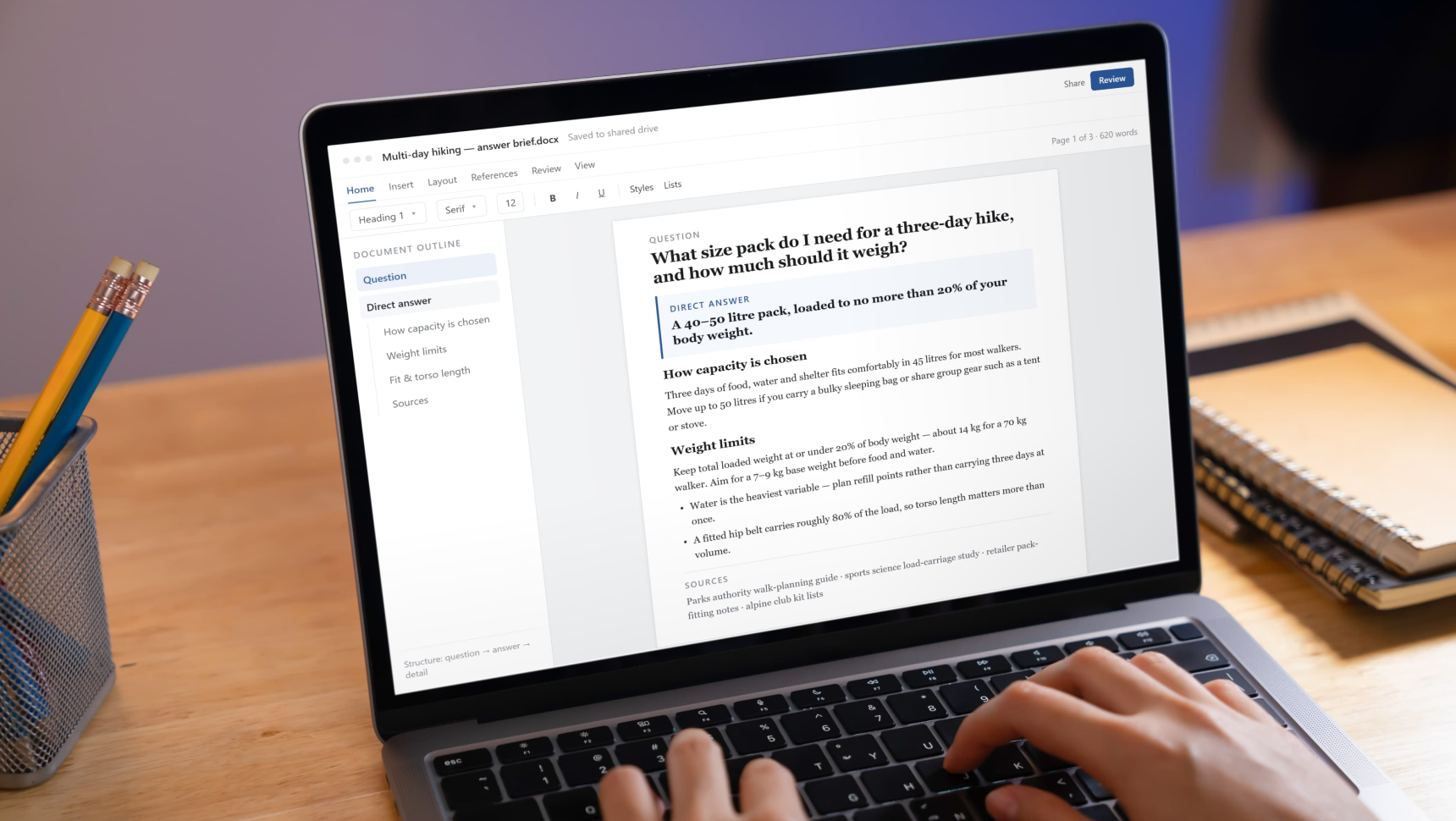
If you want content to be reused in answer boxes, it needs to be easy to extract without losing meaning. That starts with structure.
Use question-led headings
Each section should begin with a heading that clearly reflects a search intent or user question. This gives both readers and search systems a strong signal about the information that follows.
Examples include:
- What is GSO?
- Why do answer boxes matter in AI search?
- How should content be structured for extraction?
A heading like this creates a clean relationship between the query and the answer.
Place the answer immediately below the heading
The first paragraph under the heading should answer the question directly. Keep it focused and self-contained. In many cases, around 40 to 70 words works well because it gives enough room for clarity without becoming bloated.
For example:
What is an answer box in GSO?
An answer box in GSO is a concise block of content designed to directly answer a user query in a format that AI systems and search engines can easily identify, extract, and display within search results or generated responses.
That opening paragraph does the heavy lifting. After it, you can expand with detail.
Expand after the core answer
Once the direct answer is established, use the following paragraphs to deepen the topic. You might explain why it matters, show how it works, or provide an example. This layered format is useful because it serves both short-attention users and readers who want more depth.
It also helps AI systems. The first paragraph can be extracted as the answer, while the rest of the section provides supporting context.
Keep formatting clear and predictable
AI systems respond well to structure that separates ideas cleanly. Helpful formats include:
- short paragraphs
- bulleted summaries
- numbered steps
- comparison tables
- definition blocks
These formats create clear information boundaries, which makes it easier for systems to identify individual facts or explanations.
Maintain semantic consistency
If a page uses five different phrases for the same idea, it becomes harder to interpret. Consistent terminology improves semantic clarity. If your topic is answer boxes, keep referring to answer boxes, direct answers, search extraction, and related concepts in a stable way. The same applies to entities such as your brand, services, products, and core topics.
This is where GSO overlaps with entity building and structured content design. Search systems are more confident when the language across a page reinforces the same topic relationships.
What Optimised Answer Box Content Looks Like
The easiest way to understand answer box optimisation is to look at the format in action.
Example 1: Clear definition
What is Generative + Search Optimisation?
Generative Search Optimisation is the process of structuring content so AI-driven search systems can easily interpret, retrieve, and use it within generated answers. It focuses on clarity, semantic relevance, entity strength, and extractable information blocks.
Why this works:
- the heading matches a likely query
- the answer appears immediately below it
- the response is concise but complete
Example 2: Direct explanatory answer
Why do AI systems favour answer boxes?
AI systems favour answer boxes because they provide concise, self-contained responses that are easier to interpret and extract than dense blocks of text. This makes them useful for building direct answers, summaries, and conversational search responses.
Why this works:
- it answers the question in one paragraph
- the wording is direct and specific
- the explanation stands alone without extra context
Example 3: Step-led answer
How can brands optimise for answer box extraction?
Brands can optimise for answer box extraction by using question-based headings, placing concise answers directly beneath them, formatting content clearly, and reinforcing authority with trustworthy references and consistent topical language.
Why this works:
- it summarises the process in a single extractable block
- it covers the core actions without drifting into detail too early
- it creates a logical bridge into the expanded section that follows
Example 4: Comparison answer
What is the difference between SEO and GSO?
SEO focuses on improving visibility in search engine results pages, while GSO focuses on improving how content is interpreted and surfaced within AI-generated answers. Both rely on quality content, though GSO places stronger emphasis on extractability, semantic relationships, and answer-ready formatting.
Why this works:
- comparison queries are common in search
- the answer clearly distinguishes two related concepts
- the structure makes the contrast easy to understand
The common thread across all of these examples is simple. The heading frames the question, the first paragraph answers it, and the surrounding copy expands the topic without weakening the clarity of the core response.
Why Answer Box Strategy Belongs in Every GSO Framework

Answer boxes are becoming a practical interface between your content and AI search systems. They help turn a page from a passive ranking asset into an active source of machine-readable answers.
For brands, this has real strategic value. Well-structured answer content can improve your chances of being referenced in AI-generated responses, strengthen topical authority, and make your pages easier to navigate for human readers at the same time.
It also encourages better writing. Pages built for answer box extraction tend to be clearer, more purposeful, and more useful. They respect the user's time and make key information easier to find.
That makes answer box strategy a natural part of any strong GSO approach. It supports discoverability, improves information design, and aligns your content with how generative search is evolving.
To explore the role of brevity in answer-ready writing, read The Value of Conciseness.
If you're wanting your brand to show up where people are searching, connect with us.