

How to Audit Your Website for GSO Readiness
Generative + Search Optimisation (GSO) — also referred to as AI SEO — audits look beyond classic rankings to answer a different question: is your site easy for AI-driven search experiences to understand, trust, and cite?
That means auditing for:
- Clear, extractable answers (so models can quote you accurately)
- Strong entity signals (so your brand and topics are recognised correctly)
- Technical clarity (so crawlers and parsers can reliably interpret your pages)
- Measurement baselines (so you can prove progress over time)
Google has also published site-owner guidance on how to approach inclusion in AI features like AI Overviews and AI Mode, which reinforces the same fundamentals: make content accessible, high quality, and easy to interpret.
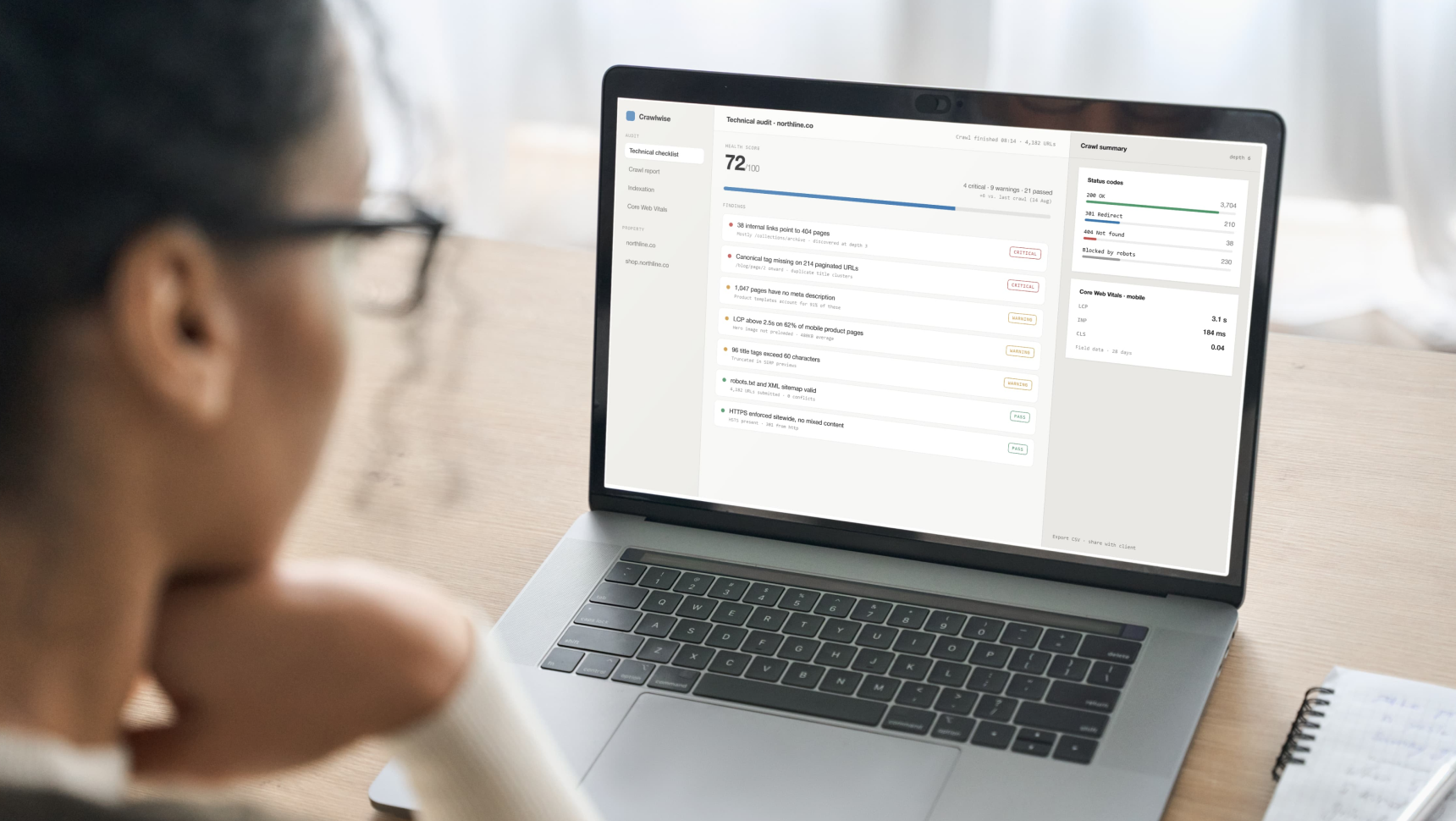
What a “GSO-Ready” Website Looks Like
To get a full run-down of what GSO is and how it works, make sure to read our Definitive Guide to GSO.
When it comes to GSO, a practical way to think about readiness is whether your website can consistently deliver four outcomes:
Answerability
- Key questions are answered directly, early, and in plain language.
- Definitions, steps, requirements, and comparisons are structured so they can be extracted cleanly.
Interpretability
- Pages are organised so machines can reliably identify what the page is about, who it is for, and what to do next.
- Important details are visible in the HTML and reinforced via structured data where appropriate.
Trust and provenance
- Readers can immediately see authorship, credentials, evidence, and currency.
- Content aligns with “helpful, reliable, people-first” guidance, including E-E-A-T considerations.
Measurability
- You can track visibility and attribution across search and AI discovery, not only traffic and rankings.
With that framing in mind, here is an audit approach you can run as a repeatable system.

Content Structure Audit: Make Pages Easy to Parse, Quote, and Use
When you audit your website’s content, you’re checking whether it is extractable, meaning it can be cleanly lifted into answers without losing meaning or context.
Step 1: Build your audit sample set
Start with 30 to 100 URLs across:
- Your top organic landing pages
- Core service pages
- Highest converting pages
- A representative set of blog or resource pages
- Any pages that frequently earn backlinks or brand mentions
Pull candidates from Google Search Console and GA4, then add priority pages from your sitemap and navigation.
Step 2: Check for “answer-first” architecture
On each page, look for:
- A clear primary intent (one main job per page)
- A short, direct opening summary that states the outcome for the reader
- Headings that map to real questions users ask (not internal brand phrasing)
Google’s people-first content guidance encourages self-assessment around whether pages genuinely help users accomplish their task. That same discipline improves how reliably AI can ground and cite your content.
Step 3: Audit headings, scannability, and extraction points
AI systems tend to reuse clean “blocks” of meaning. Create these intentionally:
- Use descriptive H2s that represent sub-questions
- Keep paragraphs focused on a single idea
- Use lists where they clarify steps, inclusions, requirements, or options
Extraction points to add where relevant:
- Definitions (“What is X?”)
- Who it is for
- How it works
- Requirements, inclusions, exclusions (presented neutrally)
- Process steps
- FAQs with direct answers
Step 4: Check for consistency across the site
In a GSO context, consistency reduces ambiguity:
- Use one preferred name for each key product, service, and concept
- Standardise how you reference locations, credentials, awards, and policies
- Make CTAs consistent with page intent (book, enquire, download, compare)
Step 5: Content design checks that impact machine readability
Quick wins that improve parsing:
- Avoid burying key information in images or carousels without supporting text
- Ensure tables have proper headers and are readable on mobile
- Use descriptive anchor text for internal links, so relationships are explicit
Entity and Semantic Audit: Strengthen Who You Are, What You Do, and How You Connect
Next you need to check whether your content communicates clear entity signals so AI systems can:
- Identify your brand and offerings accurately
- Connect you to the right topics and categories
- Attribute statements to the correct organisation, person, or product
Step 1: Confirm your core entity set
Document the entities you want to own:
- Brand (legal name, trading name, acronym, variants)
- Founders, leaders, subject matter experts
- Products and services
- Locations and service areas
- Industry categories and sub-specialties
Then confirm each entity has a dedicated “home” page that is internally linked, crawlable, and up to date.
Step 2: Check for entity reinforcement on priority pages
On key pages, confirm you reinforce entities using:
- Consistent naming
- Clear definitions and context
- Supporting references (case studies, policies, standards, evidence)
- Internal links that connect related entities and topics
Where appropriate, support interpretability using structured data, since Google explicitly uses structured data to understand page content and entities, and it can also power rich results.
Step 3: Map topic coverage and semantic gaps
Use a semantic approach that evaluates topic completeness rather than keyword repetition:
- Compare your pages to the user’s full decision journey, including questions that happen before purchase
- Identify missing subtopics that help AI build a complete answer
- Identify pages that overlap too heavily and split authority
Tools you already use in this project can support this:
- Frase SEO, GEO + AEO workflows to find missing concepts and improve “citation readiness” in generative environments
- Ahrefs Brand Radar to see where your brand appears in AI answers and which sources are being used
Step 4: Validate authorship and expertise signals
For pages where trust matters most, audit whether readers and systems can easily understand:
- Who wrote it
- Why they are qualified
- When it was last reviewed or updated
- How claims are supported
Google explicitly points site owners to E-E-A-T concepts as a useful lens for self-assessing content quality.
Technical Signals Audit: Make Crawling, Rendering, and Markup Unambiguous
Technical audits for GSO focus on whether AI and search crawlers can reliably access, render, and interpret your content.
Step 1: Crawl the site and prioritise high-impact issues
Use a crawler to collect:
- Indexability and canonical signals
- Response codes and redirect chains
- Orphan pages
- Duplicate titles, headings, and thin pages
- Structured data coverage and validation
Step 2: Structured data review and validation
Structured data is not a shortcut to visibility, but it improves interpretability when it accurately reflects visible content. Structured data helps Google and AI bots understand content and outlines quality and technical guidelines.
Audit:
- Schema coverage on key page types (Organisation, LocalBusiness where relevant, Article, FAQ where appropriate, Product or Service where relevant)
- Validity and alignment with on-page content
- Consistency of entity properties (name, logo, sameAs, address, contact details)
Also consider Bing’s guidance on structured data, especially if Microsoft ecosystems matter for your audience.
Step 3: Indexing and rendering checks in Search Console
Use the URL Inspection tool to confirm what Google has indexed and whether the canonical and rendered content match expectations. Google describes URL Inspection as providing crawl, index, and serving information directly from the Google index.
Check:
- Coverage issues on priority URLs
- Last crawl dates on updated pages
- Canonical selection
- Mobile usability issues that affect content access
Step 4: Site structure and URL clarity
A clean information architecture strengthens both user navigation and machine understanding. Google publishes URL structure best practices to help search engines and users better understand a site.
Audit:
- Logical URL patterns aligned to topic clusters
- Breadcrumbs and internal linking depth
- Navigation labels that match real user language
Step 5: Performance and page experience basics
For GSO readiness, the goal is reliability:
- Pages load quickly enough that critical content is not delayed
- Key content is not blocked by scripts
- Mobile layouts do not hide essential information
Measurement Baselines: Set Up Proof, Not Opinions
You cannot manage what you cannot measure. A GSO baseline should capture both classic search performance and emerging AI discovery.
For a full breakdown of how to track and measure GSO performance, see our guide.
Baseline A: Search Console foundations
Record:
- Top queries and pages by impressions and clicks
- Branded vs non-branded query mix
- Snapshot of coverage and indexing health for priority templates
Keep this as your “before” benchmark, then re-run monthly.
Baseline B: GA4 traffic attribution for AI discovery
In GA4, create a baseline view of:
- Referral traffic from known AI surfaces where available
- Landing pages receiving that traffic
- Engagement and conversion behaviour for those sessions
The exact referrers can evolve over time, so baseline what is currently visible, then track trend direction.
Baseline C: AI visibility and citation tracking
This is where many teams currently lack a system.
Using an AI visibility tracker such as Ahrefs Brand Radar, establish:
- Which prompts or topics surface your brand
- How often you are mentioned
- Whether mentions are accurate
- Which domains and pages are being cited alongside your brand
Baseline D: Content readiness scoring
Create a scoring model you can re-run quarterly, covering:
- Answerability and extraction
- Entity clarity
- Structured data presence and validity
- Author and evidence signals
- Internal link connectivity
Turning the Audit Into a Repeatable GSO Workflow
A GSO readiness audit is most valuable when it becomes a loop:
- Find issues that reduce answerability and interpretability
- Fix templates first, then priority pages
- Strengthen entity and semantic coverage
- Validate crawl, index, and markup
- Track change over time using a defined baseline
The fundamentals still matter: high-quality, accessible content is the foundation for inclusion in generative responses and search.
Connect with us to set your website up for success in this new era of search.
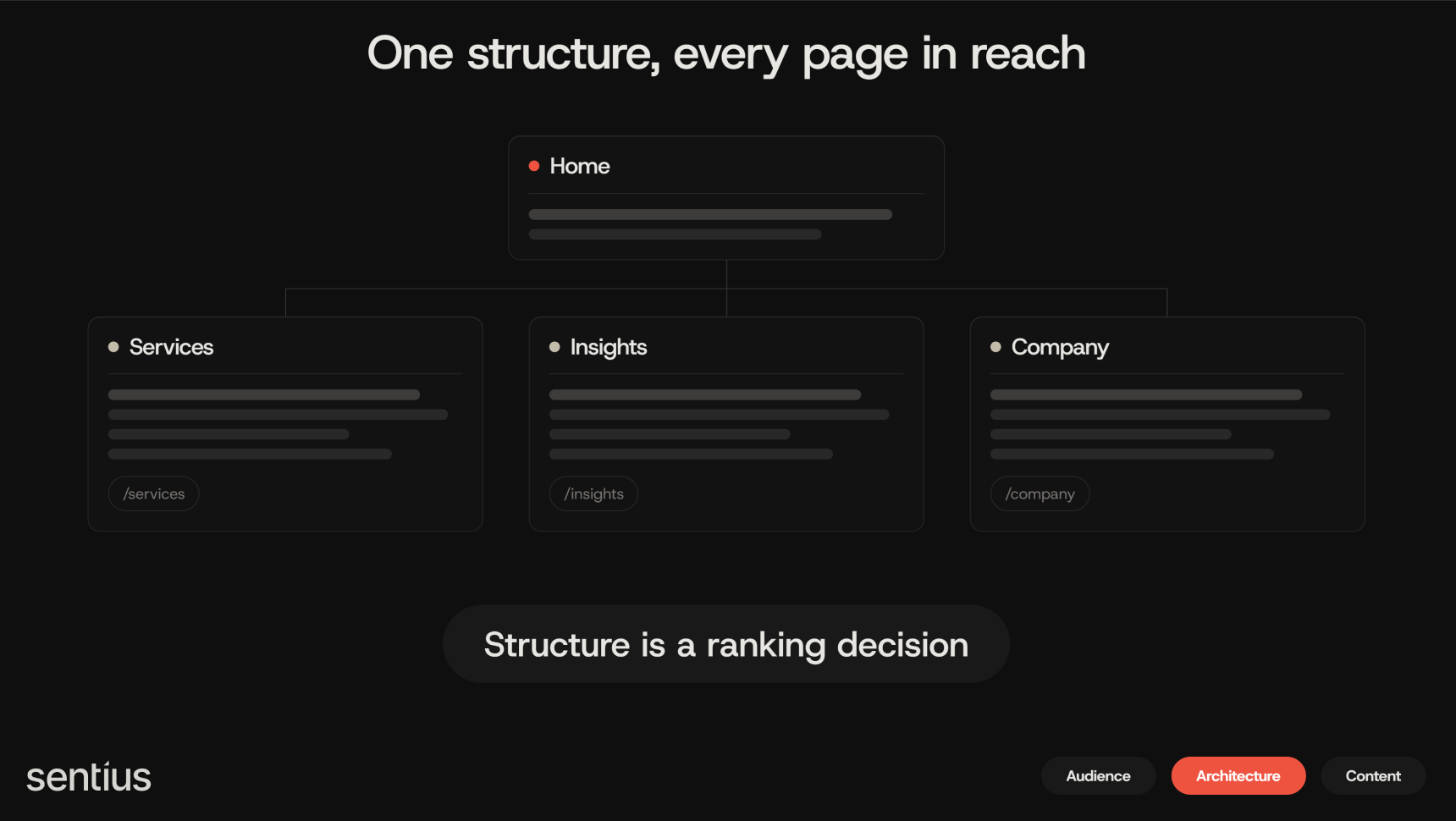
GSO Readiness Audit Checklist
1. Content Structure & Answerability
Page Intent & Architecture
- Each priority page has one clear primary intent
- Opening section clearly summarises the outcome for the user
- Headings reflect real user questions
- Page avoids mixed intent or competing CTAs
Extractable Content Blocks
- Definitions are clearly written and self-contained
- Processes are presented as step-based lists where relevant
- Requirements and inclusions are clearly structured
- Comparisons are clearly formatted
- FAQs provide direct, complete answers
Scannability & Readability
- H2s and H3s are descriptive and meaningful
- Paragraphs focus on one idea
- Key information is not buried in images or tabs
- Tables use proper headers and render correctly on mobile
- Internal links use descriptive anchor text
2. Entity & Semantic Clarity
Core Entity Definition
- Brand name is consistent across all pages
- Products and services have dedicated, crawlable pages
- Key experts or authors have profile pages
- Locations and service areas are clearly defined
Entity Reinforcement
- Important entities are internally linked consistently
- Terminology is standardised across the site
- Supporting context is provided for key services
- Case studies or evidence reinforce service claims
Semantic Coverage
- Page covers the full decision journey, not only conversion points
- Related subtopics are addressed where relevant
- No major semantic gaps compared to competitor coverage
- Overlapping pages have been consolidated or clarified
Trust & Attribution Signals
- Author is clearly identified where relevant
- Credentials are visible and verifiable
- Last updated or reviewed date is present
- Claims are supported by credible sources where required
3. Technical & Structured Data Signals
Crawl & Indexing
- Page returns 200 status code
- Canonical tag is correct
- Page is indexable
- No redirect chains
- No duplicate title or H1 issues
Structured Data
- Organisation schema present and valid
- Relevant schema types implemented appropriately
- Structured data matches visible content
- No validation errors
- Entity properties are consistent across pages
Information Architecture
- URL structure reflects topic hierarchy
- Breadcrumbs implemented where relevant
- Pages are accessible within 3 clicks
- No orphan pages
- Navigation labels reflect user language
Performance & Rendering
- Page renders correctly in Search Console
- Critical content loads without delay
- Mobile layout does not hide essential content
- Core Web Vitals within acceptable thresholds
4. Measurement Baselines
Search Performance Baseline
- Top queries recorded
- Top landing pages recorded
- Branded vs non-branded split documented
- Current average positions captured
AI Visibility Baseline
- Brand mentions in AI answers recorded
- Prompt categories tracked
- Citation accuracy reviewed
- Competitor presence benchmarked
Traffic & Engagement
- GA4 landing page baseline documented
- Referral sources from AI tools tracked
- Conversion rate by landing page recorded
- Engagement metrics benchmarked
5. Scoring & Prioritisation
Overall GSO Readiness Score
Assign 0–2 per item and calculate:
- Content Structure Score: ___ / ___
- Entity & Semantic Score: ___ / ___
- Technical Signals Score: ___ / ___
- Measurement Baseline Score: ___ / ___
Priority Classification
- High Priority: Blocks indexing, answer extraction, or entity clarity
- Medium Priority: Improves citation likelihood and semantic depth
- Low Priority: Enhances refinement and performance optimisation
6. Ongoing Review Cadence
- Quarterly full audit
- Monthly measurement update
- Template-level improvements tracked
- Entity map updated when new services launch
- Structured data validated after deployments