
Semantic Content: The Foundation of a Successful GSO Strategy
Why Semantic Content Sits at the Core of GSO
Search has moved from keywords to meaning.
As outlined in our Definitive Guide to GSO, Generative + Search Optimisation is built around how modern search systems interpret context, relationships, and intent. Traditional SEO focused heavily on ranking for phrases. GSO focuses on becoming the most reliable, contextually complete answer source.
That shift matters because platforms such as Google’s AI Overviews, conversational assistants, and multimodal search systems evaluate content differently. They assess:
- Contextual clarity
- Entity relationships
- Topical depth
- Structural integrity
- Source credibility
Google has openly discussed its transition toward semantic understanding through initiatives like the Knowledge Graph and its Natural Language Processing advancements, including BERT and MUM. These systems interpret the meaning behind queries rather than matching exact strings of text.
For brands investing in GSO, semantic content is not an enhancement. It is the structural base.
What Semantic Content Actually Means

Semantic content is content structured around meaning, relationships, and intent rather than isolated keywords.
It answers questions in context.
It defines concepts clearly.
It connects related ideas logically.
Instead of optimising a page for a single term such as “AI marketing strategy,” semantic optimisation considers:
- What entities are involved?
- What related subtopics provide clarity?
- What supporting definitions improve understanding?
- What adjacent questions might an AI system surface?
Search engines build topic maps. Generative systems assemble answers from multiple sources. Content that clearly defines concepts, explains relationships, and supports layered understanding is easier for these systems to interpret and cite.
In practice, semantic content includes:
- Clear definitions
- Structured headings
- Contextual internal links
- Entity clarity
- Supporting explanations
- Question-based subsections
For Sentius clients, this approach ensures content performs across both traditional rankings and generative outputs.
Entity Clarity: The Engine of Relevance
Modern search systems organise information around entities. An entity can be a brand, person, concept, product, technology, or organisation. Google’s Knowledge Graph is a prime example of entity-based indexing.
When your content consistently defines and connects entities, you improve your relevance signals.
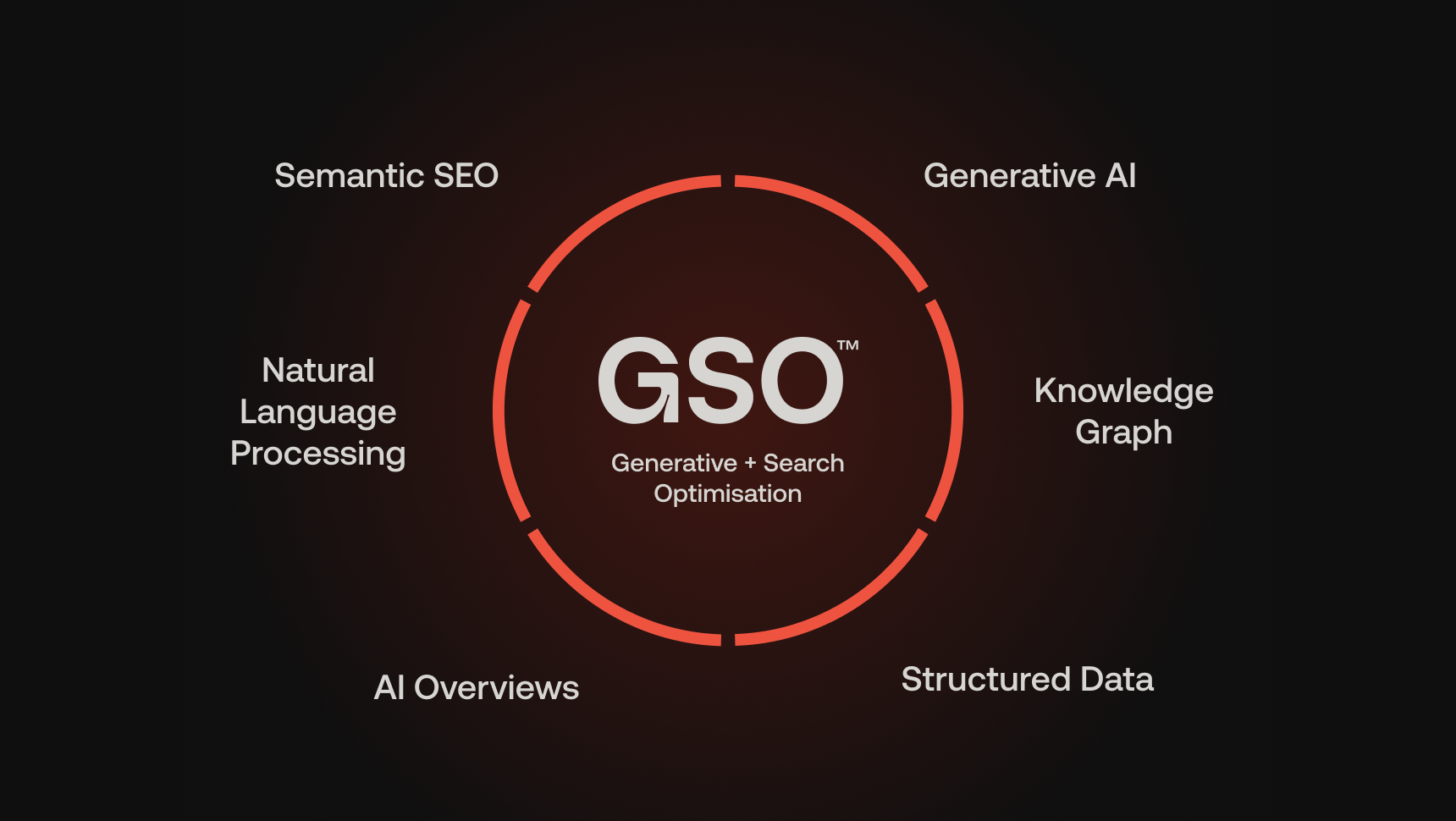
For example, within GSO, relevant entities might include:
- Generative AI
- Knowledge Graph
- Structured Data
- Semantic SEO
- Natural Language Processing
- AI Overviews
Search systems assess how confidently your content explains the relationships between those entities.
Strong entity clarity requires:
- Consistent terminology
- Explicit definitions
- Cross-page alignment
- Structured schema markup
- Internal linking that reinforces topical clusters
This is why building a knowledge architecture matters. Our guide on Building a Foundational Knowledge Graph for Your Brand explains how entity consistency strengthens discoverability across generative systems.
When entities are fragmented or inconsistently described, AI systems struggle to connect the dots. When they are clearly mapped, your brand becomes a reliable reference point.
Topic Layering and Contextual Depth
Surface-level content rarely performs well in generative environments. AI models evaluate depth and contextual completeness.
Topic layering involves structuring content so that:
- The core concept is defined clearly
- Supporting subtopics expand understanding
- Related questions are addressed
- Adjacent entities are referenced naturally
- Examples reinforce applied understanding
This layered structure mirrors how large language models interpret semantic relationships.
For example, a page on Generative Search + Optimisation should logically reference:
- Search evolution
- AI summarisation systems
- Structured data
- Entity modelling
- Content clustering
- Measurement frameworks
Layered content increases the probability that your page contributes to AI-generated responses because it provides comprehensive contextual grounding.
Depth does not mean unnecessary length. It means completeness.
At Sentius, semantic layering is built into our content architecture frameworks so that every pillar page connects to supporting cluster content. This strengthens both crawl efficiency and generative interpretation.
How Semantic Signals Shape AI-Generated Answers
Generative systems do not rank pages in the traditional sense. They synthesise answers.
To be included in those answers, your content must demonstrate:
- Clear definitions
- Contextual authority
- Structured formatting
- Entity precision
- Reinforced relationships
AI systems extract answer fragments from pages that:
- Present information concisely
- Use structured headings
- Clarify key terms
- Provide direct explanations
- Align with search intent
Google’s documentation on structured data highlights how semantic markup helps search engines understand content meaning.
This connects directly to our deeper discussion in The Role of Structured Data in GSO, where we outline how schema strengthens semantic clarity at scale.
When semantic content and structured data work together, you create:
- Machine-readable meaning
- Human-readable clarity
- Cross-platform adaptability
This combination increases the likelihood that your brand appears within AI summaries, conversational responses, and voice results.
Semantic Content as Strategic Infrastructure
Semantic content is strategic infrastructure for the AI-driven search landscape.
It ensures your brand:
- Communicates concepts clearly
- Defines its core entities consistently
- Connects related topics logically
- Supports generative extraction
- Reinforces authority signals
In a generative search environment, clarity wins. Depth matters. Structure drives discoverability.
GSO is built on these principles.
By embedding semantic thinking into your content strategy, you move from chasing keywords to owning knowledge territory. That shift positions your brand for long-term visibility across both traditional search engines and emerging generative platforms.
For organisations preparing for the next evolution of search, semantic content is not optional. It is foundational.
Be ready for the future of search, connect with us.

Written by Omkar Gurjar
Omkar joins Sentius as the Head of Organic Search, bringing over 15 years of experience in the digital landscape. Having spent the last decade in Singapore, he possesses a deep understanding of global SEO strategies and a proven track record of helping international brands dominate organic search. He is a data-driven leader with a genuine enthusiasm for blending technical excellence with strategic content to help his clients thrive and grow in the digital space.
When he’s not developing SEO roadmaps, Omkar is a passionate sports enthusiast who never misses a chance to follow cricket or football. A true culinary explorer, he loves discovering local flavours and trying various cuisines wherever his travels take him, though he still holds a special fondness for the vibrant food scene in Singapore.
Written by Omkar Gurjar
Omkar joins Sentius as the Head of Organic Search, bringing over 15 years of experience in the digital landscape. Having spent the last decade in Singapore, he possesses a deep understanding of global SEO strategies and a proven track record of helping international brands dominate organic search. He is a data-driven leader with a genuine enthusiasm for blending technical excellence with strategic content to help his clients thrive and grow in the digital space.
When he’s not developing SEO roadmaps, Omkar is a passionate sports enthusiast who never misses a chance to follow cricket or football. A true culinary explorer, he loves discovering local flavours and trying various cuisines wherever his travels take him, though he still holds a special fondness for the vibrant food scene in Singapore.