
What Is GSO and How Is It Different From SEO?
Search Has Changed. Optimisation Must Change With It.
For more than two decades, businesses have optimised for search engines. Rankings, keywords, backlinks, and technical performance have defined digital visibility.
But search behaviour is evolving.
Users are no longer just clicking through blue links. They are:
- Reading AI-generated summaries at the top of results
- Asking follow-up questions in conversational interfaces
- Receiving synthesised answers that cite multiple sources
- Using tools like ChatGPT, Google Gemini, and Microsoft Copilot to research, compare, and decide
Search is becoming generative.
This shift requires more than traditional SEO. It requires GSO: Generative + Search Optimisation.
At Sentius, GSO is our structured response to this transformation. It recognises that businesses must now optimise not only for rankings, but for inclusion in AI-generated answers, summaries, and recommendations.
SEO is no longer the whole strategy. It is one part of a broader visibility ecosystem.
Traditional AI vs AI-Era Search: What’s Actually Different?

How Traditional SEO Works
Traditional SEO focuses on:
- Ranking for specific keywords
- Appearing in organic search results
- Optimising title tags, meta descriptions, and on-page copy
- Building backlinks to improve authority
- Improving crawlability and technical health
The model is straightforward:
User searches → Search engine lists links → User clicks → Website receives traffic.
Success is measured by rankings, impressions, click-through rate, and organic sessions.
How AI-Era Search Works
AI-driven search experiences change this model.
Platforms such as Google AI Overviews and generative AI assistants synthesise information across multiple sources to deliver:
- Structured summaries
- Comparative analysis
- Step-by-step explanations
- Direct recommendations
- Conversational follow-ups
In this model:
User searches → AI generates an answer → Sources are referenced → User may not click.
Visibility becomes about being cited, summarised, or included within AI responses.
This has major implications:
- Click-through rates may decline even when visibility increases
- Authority signals matter more than ever
- Structured, semantically rich content becomes critical
- Brand mentions across the web influence inclusion
Traditional SEO optimises for rankings.
GSO optimises for representation within generative answers.
What GSO Optimises For (Beyond Rankings)
GSO expands optimisation from search engines to search ecosystems.
It focuses on ensuring your brand is:
- Understood
- Trusted
- Structured
- Citable
- Contextually relevant
At a high level, GSO optimises for:
1. Inclusion in AI-Generated Answers
Ensuring your expertise is synthesised into generative summaries.
2. Entity Clarity
Search engines and AI models understand your brand, services, and topics as distinct entities.
3. Semantic Depth
Content covers topics comprehensively, not just by keyword density.
4. Structured Authority
Clear internal linking, topic clusters, and hierarchy that AI systems can parse.
5. Distributed Brand Signals
Mentions, citations and references across trusted domains.
This is explored in depth in The Definitive Guide to GSO, where we outline the full framework across content, structure, entities, and distribution.
Unlike traditional SEO, GSO recognises that AI systems:
- Learn from patterns across the web
- Value clarity and structured context
- Weigh brand consistency heavily
- Reward authoritative, well-linked ecosystems
In short: GSO optimises for how machines interpret meaning, not just how they index keywords.
Traditional Snippets vs Generative Answers, A Comparison
To understand the difference, it helps to visualise it.
Traditional Feature Snippet
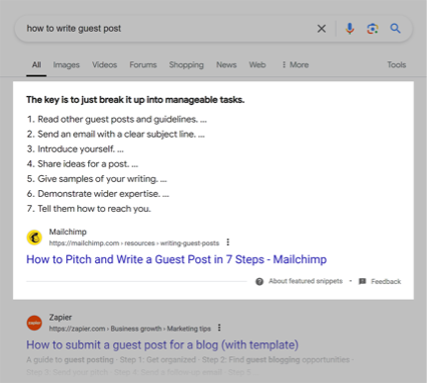
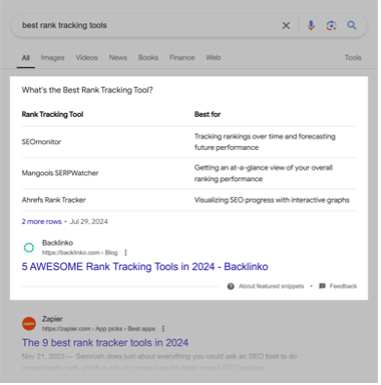

A traditional featured snippet:
- Pulls a short excerpt from one page
- Displays it prominently
- Links clearly to the source
- Encourages click-through
It is still fundamentally link-driven.
Generative AI Overview
A generative overview:
- Synthesises multiple sources
- Provides structured comparisons
- Summarises consensus
- May cite several brands
- May reduce the need for a click
In this environment, your content must:
- Be clear enough to extract
- Be authoritative enough to trust
- Be structured enough to interpret
- Be present enough across the web to validate
GSO is about increasing the probability that your brand appears inside that synthesis.
SEO and GSO Are Not Competitors, They’re Complementary
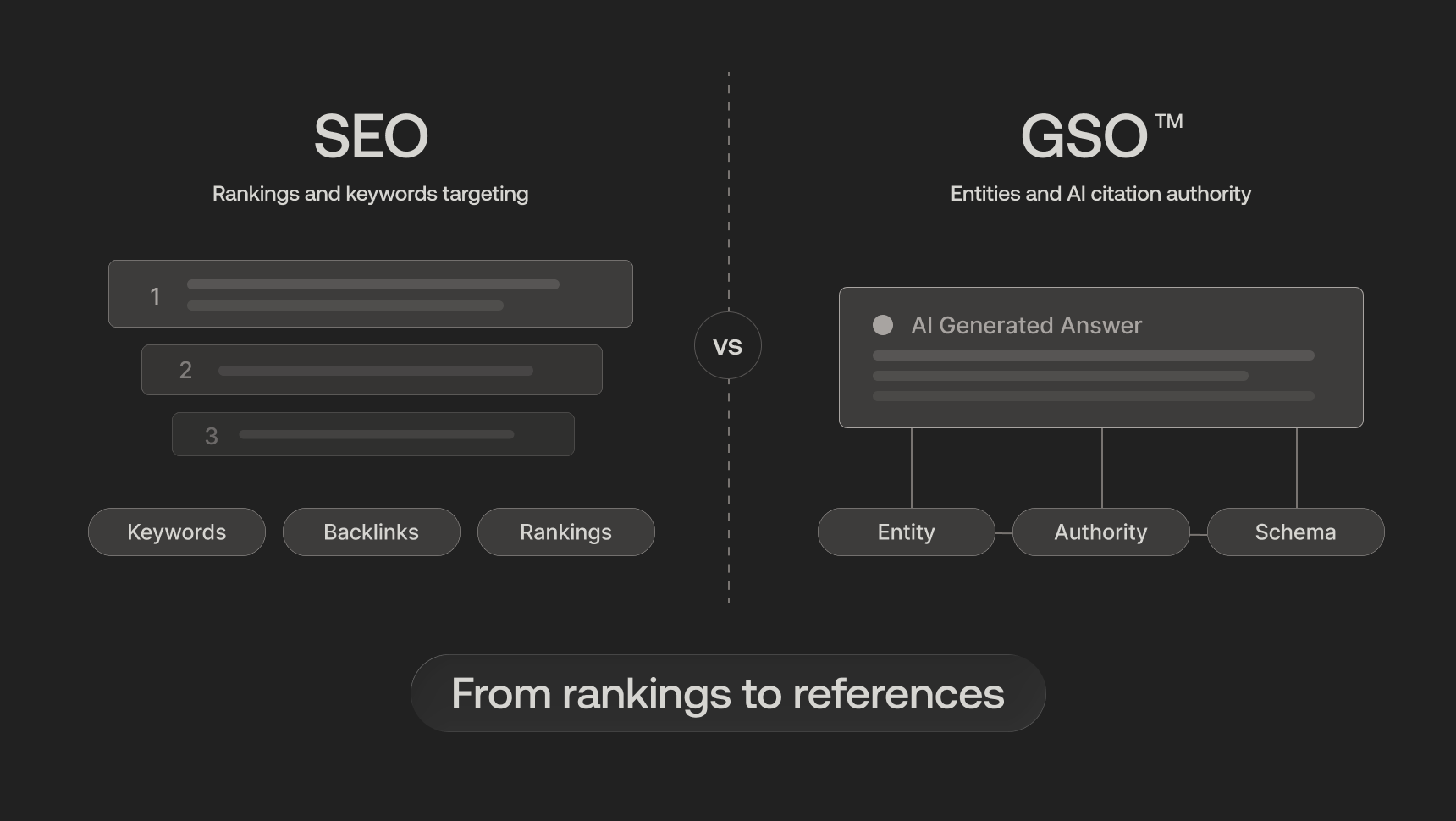
A common misconception is that GSO replaces SEO.
It does not.
Traditional SEO remains essential:
- Technical health still matters
- Indexability still matters
- Authority still matters
- Organic traffic still matters
However, SEO alone is no longer sufficient.
GSO builds on SEO by expanding optimisation to include:
- Conversational query patterns
- AI summarisation logic
- Entity recognition
- Brand distribution strategy
As discussed in The Top 5 Ways Generative AI Is Changing Search, AI is shifting:
- Query complexity
- User expectations
- Content evaluation
- Trust signals
The most resilient strategy combines:
| SEO Focus | GSO Expansion |
| Keywords | Topics & intent clusters |
| Rankings | Inclusion in AI summaries |
| Backlinks | Brand citations & entity authority |
| Page optimisation | Ecosystem optimisation |
SEO brings traffic.
GSO builds visibility across generative systems.
Together, they create defensible digital presence.
How to Begin Implementing GSO
GSO implementation does not require abandoning your existing SEO work. It requires evolving it.
Key starting points include:
1. Audit Your Entity Clarity
Does Google clearly understand:
- Who you are?
- What you do?
- What topics you own?
2. Expand from Keywords to Topics
Shift from isolated keyword targeting to structured topic clusters.
3. Improve Structural Signals
Ensure:
- Logical internal linking
- Clear content hierarchies
- Defined cornerstone pages
- Schema where relevant
4. Strengthen Distribution
AI systems learn from the broader web. This means:
- Digital PR
- Brand mentions
- Consistent cross-platform messaging
5. Measure Beyond Traffic
Track:
- Brand mentions
- AI citations
- Share of voice in summaries
- Impressions vs clicks
For a structured framework, see How to Audit Your Website for GSO Readiness[, which outlines practical evaluation criteria.
At Sentius, we integrate GSO into broader digital strategy, ensuring it aligns with technical SEO, content production, and brand positioning.
The Strategic Advantage of Understanding GSO Now
Search is not disappearing. It is evolving.
AI will not eliminate organic discovery. It will reshape it.
Businesses that adapt early will:
- Build stronger entity authority
- Gain inclusion in generative ecosystems
- Maintain visibility even as click patterns shift
- Create more resilient digital strategies
Businesses that rely solely on traditional SEO risk gradual invisibility inside AI-generated answers.
GSO is not a trend. It is the structural evolution of search optimisation.
The question is no longer:
“How do we rank?”
It is:
“How do we ensure we are represented wherever answers are generated?”
That is the shift from SEO to GSO.
Connect with us to learn more about how GSO can evolve your brand’s online presence.

Written by Omkar Gurjar
Omkar joins Sentius as the Head of Organic Search, bringing over 15 years of experience in the digital landscape. Having spent the last decade in Singapore, he possesses a deep understanding of global SEO strategies and a proven track record of helping international brands dominate organic search. He is a data-driven leader with a genuine enthusiasm for blending technical excellence with strategic content to help his clients thrive and grow in the digital space.
When he’s not developing SEO roadmaps, Omkar is a passionate sports enthusiast who never misses a chance to follow cricket or football. A true culinary explorer, he loves discovering local flavours and trying various cuisines wherever his travels take him, though he still holds a special fondness for the vibrant food scene in Singapore.
Written by Omkar Gurjar
Omkar joins Sentius as the Head of Organic Search, bringing over 15 years of experience in the digital landscape. Having spent the last decade in Singapore, he possesses a deep understanding of global SEO strategies and a proven track record of helping international brands dominate organic search. He is a data-driven leader with a genuine enthusiasm for blending technical excellence with strategic content to help his clients thrive and grow in the digital space.
When he’s not developing SEO roadmaps, Omkar is a passionate sports enthusiast who never misses a chance to follow cricket or football. A true culinary explorer, he loves discovering local flavours and trying various cuisines wherever his travels take him, though he still holds a special fondness for the vibrant food scene in Singapore.